Hello, I'm Pragya Goyal
Curiosity, computation, and creativity
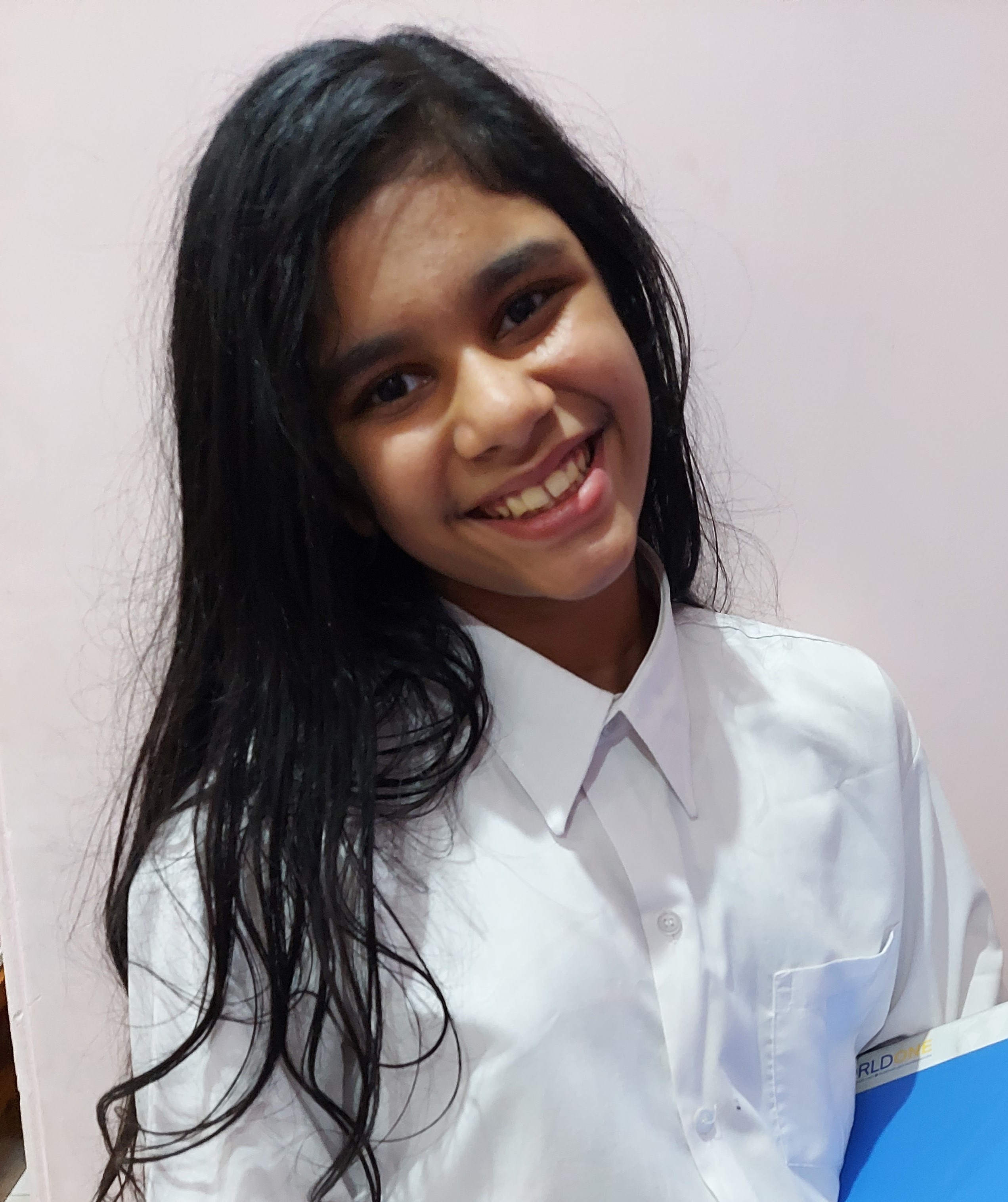
I am a high school student at Leysin American School, Switzerland, interested in physics, mathematics, computational science, quantum technologies, and artificial intelligence.
I’m drawn to questions that don’t have obvious answers: how mathematical models can explain the physical world, how computational tools can reveal patterns we might otherwise miss, and how technology can make a difference beyond the lab. This curiosity has taken me from exploring particle physics at CERN and 2D materials at UCSC to building AI-driven tools for education and social impact. Whether I’m investigating a scientific problem, developing an idea through the Lodha Genius Program, or exploring a concept through writing and art, I’m most excited by the connections that emerge when different ways of thinking come together.
Academic Achievements
IGCSE
7 A*AP CSA
5/5SAT
1510Skills
- Artist
- 2D and 3D Animation
- Researcher
- Modelling and simulation
- Artificial Intelligence
Research Internship
From the laboratory to the frontiers of physics
CERN Internship
During my summer internship at CERN, I contributed to laboratory work supporting the CMS detector upgrade at the Large Hadron Collider. Working in a cleanroom, I helped prepare detector components for sensor installation and applied protective padding using foam and Kapton tape. This experience taught me the importance of precision, cleanliness, and systematic verification when handling sensitive scientific equipment.
I also worked with a team to develop an affordable cloud chamber kit for Indian school students. I tested alternatives to dry-ice cooling, including reusable gel ice packs, and evaluated locally available materials to target a cost of approximately ₹3,000. Although particle tracks were visible, they remained faint and infrequent, highlighting the challenges of experimental design. I led the packaging design, focusing on component organization, safety, and ease of use. These projects connected my interest in particle physics with the goal of making science more accessible.
Read MoreUCSC Science Internship Program
During the UCSC Science Internship Program, I worked on preparing and transferring two-dimensional (2D) materials for nanoscale electronic devices. I used the Scotch tape method to exfoliate graphite into thin graphene flakes, transferred them onto silicon-based chips, and examined samples under an optical microscope. I also prepared polymer-coated substrates using a spin coater, fabricated transfer stamps, and worked on stacking hexagonal boron nitride, graphene, and transition metal dichalcogenides (TMDCs).
Reading scientific literature alongside laboratory work helped me understand how material transfer, surface preparation, and sample quality influence device fabrication. The internship strengthened my experimental skills and deepened my interest in 2D materials, nanotechnology, and the physics of next-generation electronic devices.
Read MoreResearch Papers
Modelling complex systems, testing ideas, and uncovering patterns
OpenFOAM-Based Comparative Study of Drag and Lift Behaviour in Bluff and Streamlined Flows
Fluid flow around solid bodies is a common phenomenon in everyday life, and understanding the resulting drag and lift forces is key to the performance and efficiency of many engineering systems. This study investigates incompressible, steady, laminar flow over three geometries—a circular cylinder, a square cylinder, and a thin flat plate—simulated using OpenFOAM, focusing on how velocity and viscosity influence drag and lift, and how this differs between bluff and streamlined bodies. In bluff bodies, pressure forces dominate, so drag is primarily due to pressure differences with minimal contribution from viscosity, while lift arises from pressure asymmetry between the upper and lower surfaces and is therefore more sensitive to viscosity. In streamlined bodies, pressure differences are minimal, so drag is caused mainly by viscous shear and responds directly to viscosity, while lift is comparatively unaffected.
Read PaperMachine Learning Classification of Quantum Particle Energy States
This study tests whether classical classifiers can identify the first four stationary states of a particle in a one-dimensional infinite well from simulated detector observations. Analytical probability densities generate 1,200 stochastic 32 × 32 images (80 detections each, peak-normalized). k-NN, Decision Tree, Random Forest, and standardized RBF-SVM are trained once on nominal data and tested on held-out observations under reduced resolution, Gaussian blur, and additional noise. Nominal accuracy is 100.0%, 95.8%, 99.2%, and 100.0%, respectively. At 25% resolution and high blur, tree-based accuracy falls to about 46–48%, while SVM and k-NN remain higher; their gap at 25% resolution is within 20-seed variability, and rankings depend on preprocessing. For resolution and blur, retraining on degraded images restores 96–100% accuracy, indicating train/test mismatch rather than lost class information. k-NN and Random Forest remain robust to the tested noise. This is a controlled synthetic robustness benchmark, not a new classification method.
Read PaperParkinson’s Resting Tremors: A NetLogo-Based Neural Simulation of Dopamine and DBS
This paper visualises the neural activity during resting tremors and the effects of different treatments using a custom-built agent-based simulation in NetLogo to model a simplified neural resting oscillator.
Among other symptoms of Parkinson’s Disease, this study focuses on Parkinsonian Resting Tremors and investigates two treatments namely Deep Brain Stimulator and an Automatic Dopamine Dosage. Among other compounds effecting tremors, this study looks at dopamine levels as a primary factor for the frequency of tremors. It analyses the effects of treatments when various parameters are changed to observe the efficiency of both the treatments.
The simulation demonstrates that Deep Brain Stimulation (DBS) is significantly more effective at suppressing Parkinsonian tremors when applied to the thalamic region compared to the cortical region. It also shows that increasing disease severity demands higher dopamine dosage frequency and quantity, with diminishing effectiveness at later stages.
Read PaperBio-Enzymatic Decomposition of Crop Residue: A Scalable Solution to Stubble Burning in India
Stubble burning in Northern India remains a serious environmental and public health concern. This study investigates the potential of bio-enzyme formulations as a scalable, cost-effective alternative for crop residue decomposition. By combining expert interviews, field visits, and controlled experiments using three different bio-enzyme compositions, the study finds that higher concentrations of jaggery and yeast substantially enhance microbial activity and accelerate stubble breakdown. The findings underscore the viability of integrating bio-enzyme use with agricultural machinery and supportive policies, thereby offering a feasible path to reducing reliance on stubble burning.
Read PaperBlogs
Making mathematics and money make sense
Maths
Numbers beyond textbooks.
These blogs simplifies complex mathematical ideas into real-world logic, making math approachable, practical, and even fun.
Explore My Blogs
Finance and Economy
Clear lessons for better money decisions.
Money decisions shape your future—learn how to make them wisely. From saving smart to understanding investments, this blog breaks down financial concepts into clear, everyday lessons.
Explore My BlogsArt Portfolio
Exploring the stories we feel but cannot always express
Mental Health
Invisible struggles made visible.
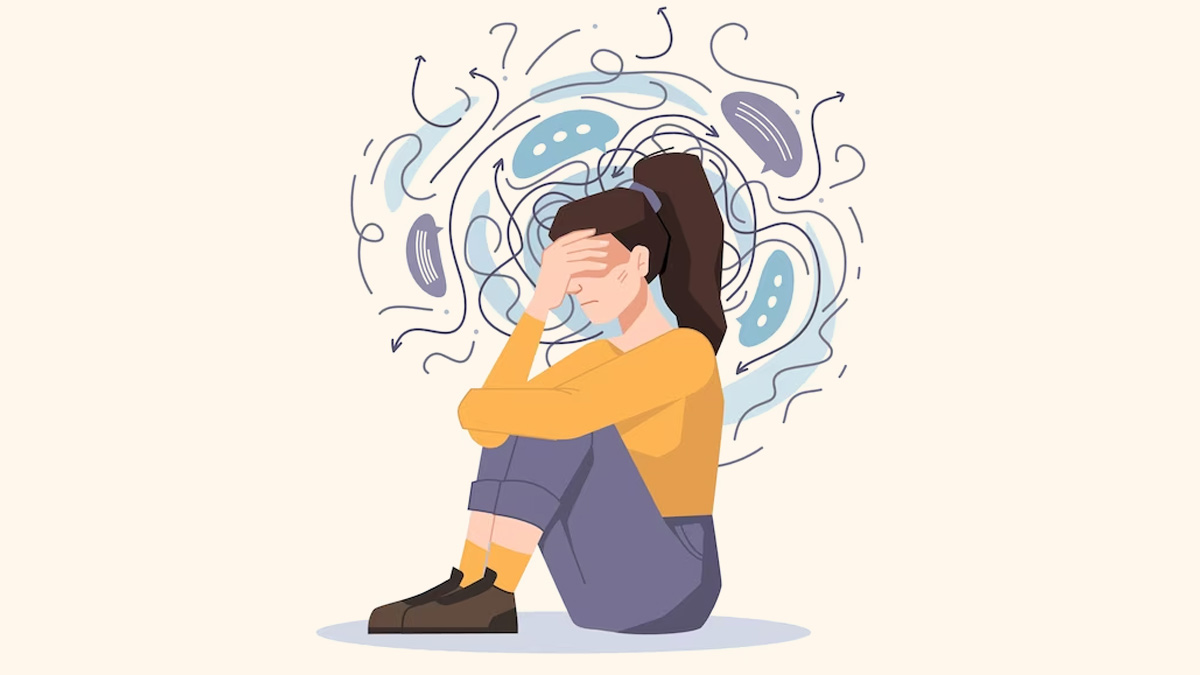
Mental health conditions like depression and anxiety are silent yet ever-present, much like shadows in our daily lives. My portfolio seeks to create artwork that resonates with viewers, reflecting the inner turmoil often hidden beneath the surface. As students, we are often subjected to academic pressures, societal expectations, and the constant influence of social media, which can heighten feelings of anxiety and depression. My focus is to explore the concept of “invisible struggles.” The motivation to explore this theme stems from my desire to raise awareness and challenge the stigma surrounding mental health. Having witnessed its impact on friends and family, I feel a personal connection that drives me to use my art as a platform for awareness. By depicting emotions and situations that are typically concealed, I hope to dismantle the barriers that prevent open discussions around mental health.
Explore My Work
Departure
Endings that become beginnings.
Departure is often seen as the end of something—a closing chapter, a goodbye, a farewell. But I chose this theme to explore how departure is also a powerful beginning. When we leave one place, situation, or relationship behind, we open ourselves to new journeys, growth, and experiences. This duality of departure, as both an end and a beginning, brings depth to the theme and reflects life’s natural ebb and flow. In my artwork, I aim to illustrate how departure can be bittersweet but is not always sad. Sometimes, leaving is necessary and positive; it allows us to grow, to seek new horizons, and to transform. For example, leaving a comfort zone often leads to discovering one’s true potential, while moving away from familiar surroundings fosters resilience and independence.
Explore My Work2D Animation
Bringing ideas to life through motion, rhythm, and visual storytelling
Product Animation
Created using Adobe After Effects
Showcasing Coffee Advertisement
Motion Design Example
Designed using Adobe After Effects
Demonstrates dynamic typography and transitions
Mobile Apps
Study Buddy — Building tools that make student life easier to manage
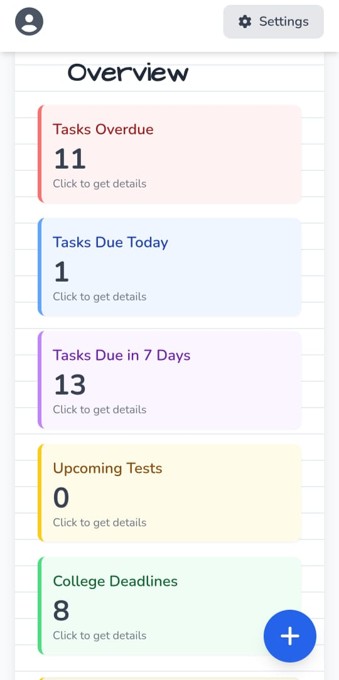
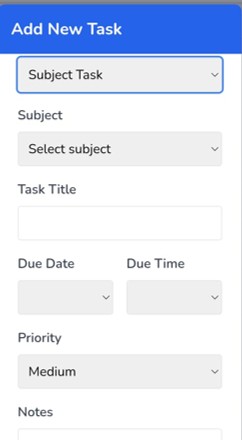
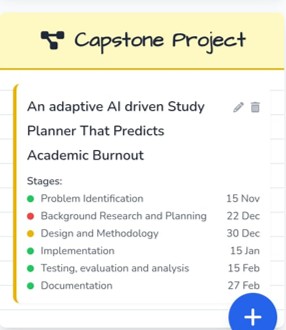
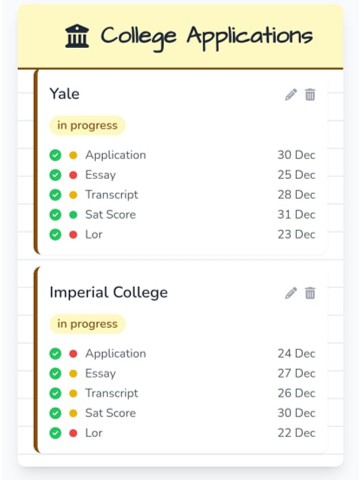
High school can be overwhelming—juggling assignments, tests, college applications, and capstone projects while trying to stay on top of deadlines. StudyTracker simplifies your academic life by bringing all your tasks into one intuitive dashboard.
- Smart Task Management:
- College Application Tracker
- Priority Alerts
- Google Calendar Sync
- Motivational Boost
Track assignments, tests, and project deadlines in one place.
Stay organised with checklists for essays, transcripts, and recommendation letters.
Never miss a due date with reminders for upcoming deadlines.
Keep your schedule in sync across all devices.
Daily quotes to keep you inspired.
Take control of your high school journey with Study Buddy—your personal academic assistant for stress-free time management!
Get In Touch
Open to collaborations, research opportunities, and creative conversations.